Registered Chemical Engineer
Engineering precision / Human-centered medicine
Franz Andrew T.
Tiangco
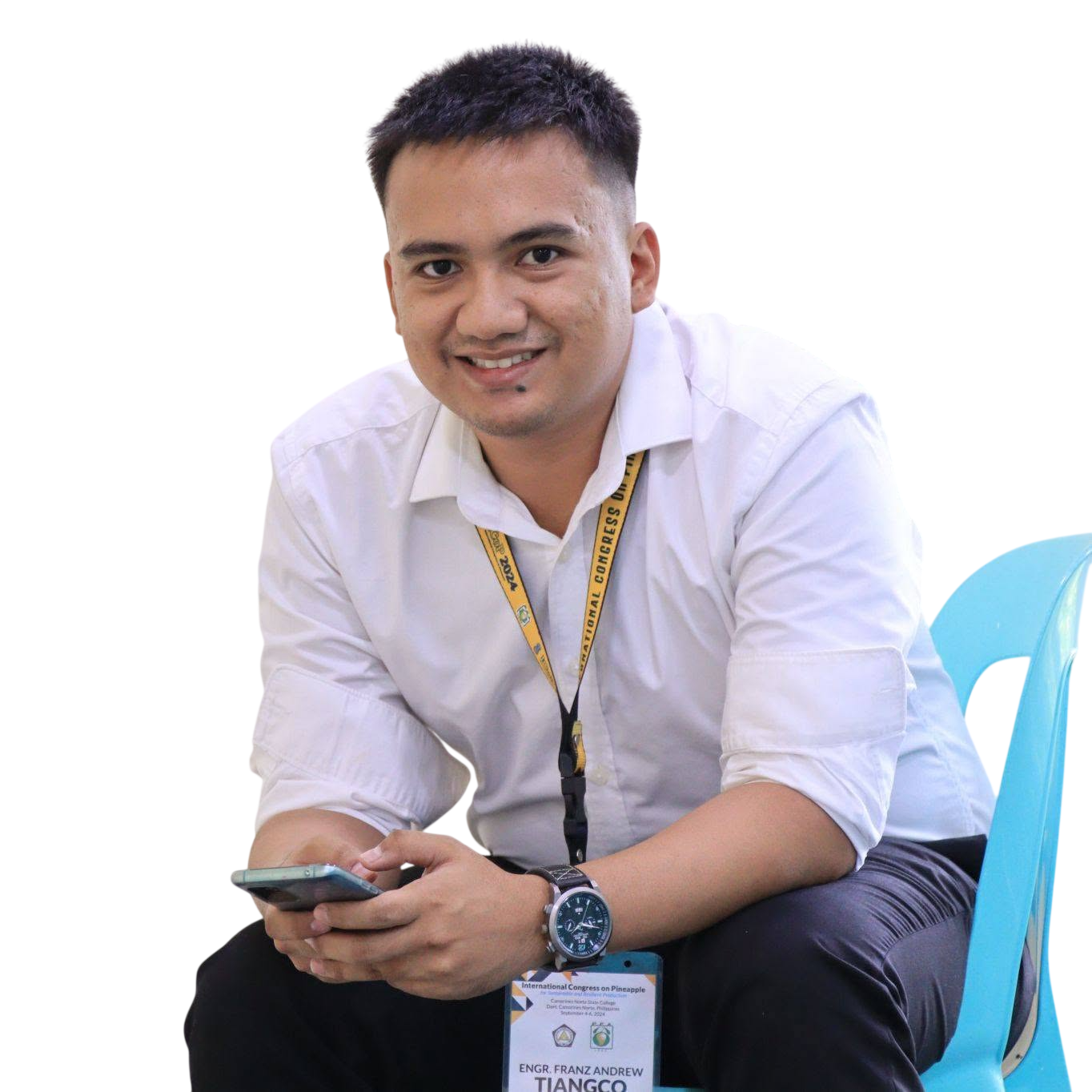
Transition 01 Engineer → Physician
Licensed professional
RChE RChT RMP
Registered Chemical Engineer
Registered Chemical Technician
Registered Master Plumber
01 / Profile
Two disciplines. One direction.
My evolving practice
I learned to understand systems. Now, I am learning the most complex one—the human body.
I am a licensed practicing Chemical Engineer with professional experience in engineering consultancy, wastewater management, and postharvest losses management. I am currently pursuing a Doctor of Medicine degree as I continue to expand my understanding of the human body, health, and the application of scientific principles in medicine.
Through medical school, I hope to build upon this foundation and develop a broader perspective that bridges engineering, science, and healthcare.
Academic foundation
BS Chemical Engineering
Major in Sugar Technology
University of the Philippines Los Baños
NXT / 2040
My long-term mission
Engineering insight for safer nuclear technology.
My goal is to combine my engineering background with medical education to contribute to the responsible development and advancement of nuclear technology in the Philippines. I aspire to understand both the applications of nuclear energy and its effects on the human body, helping shape technology that is safer, more sustainable, and more health-conscious for the Filipino people.
02 / Credentials
Proof of practice
Professional licenses
Built on standards,
evidence, and accountability.
Registered Chemical Technician
Registered Master Plumber
Pollution Control Officer
Instructor I · University of Camarines Norte
Owner · KFT Engineering Services
03 / Professional practice
Field log
Experience
Work that turns technical knowledge into responsible action.
2024 — Present
Professional engineering practice
Engineering Consultancy & KFT Engineering Services
My work covers engineering consultancy, technical documentation, regulatory compliance, wastewater management, and environmental requirements.
2025 — Present
Professional engineering projects
Water Safety Planning & Regulatory Compliance
I prepare, review, and revise Water Safety Plans and technical documents for water refilling stations and related regulatory requirements. These projects have strengthened my ability to interpret standards, identify deficiencies, communicate revisions, and prepare documents for formal review.
2022 — Present
Environmental systems
Wastewater Management
My experience includes wastewater-related engineering requirements, compliance considerations, technical assessment, and documentation.
Knowledge transfer
College instruction
Teaching Science, Mathematics & Engineering
I have handled online and face-to-face classes, delivered academic materials to engineering and science students, and completed the documentation required by the role.
Research
DOST–PCAARRD project
Postharvest Losses of Queen Pineapple
As a research assistant, I supported a funded project focused on understanding and reducing postharvest losses of Queen Pineapple in Camarines Norte.
Engineering ConsultancyWastewater ManagementWater Safety PlanningEnvironmental CompliancePostharvest LossesTechnical DocumentationProblem-SolvingResearch & Data AnalysisScientific CommunicationProject Coordination
04 / Medical school
Learning log · Prelim 2026
A new professional lens
From process systems
to living systems.
My medical education is developing a new perspective built upon my engineering foundation. Select an entry to read the full reflection.
Chapter 1First Real Class+
Today was our first real Biochemistry class, and it felt like the actual beginning of the subject for me. We were introduced to biomolecules, chemical bonds, metabolism, ATP, and the different levels of organization in the human body. At first, I expected Biochemistry to be mostly about memorizing pathways and chemical structures, but I started to realize that it is really about understanding how the processes happening inside our cells ultimately affect the whole body.
I found the relationship between catabolism and anabolism especially interesting and learned how they are connected through energy metabolism. It made me think about how many biochemical processes are constantly happening even when we are not consciously aware of them.
I expect the next classes to become more challenging as we deal with more detailed molecules and pathways. At the same time, I look forward to understanding the subject beyond memorizing facts and seeing how it connects to medicine.
Clinical formationCommunication Skills Session+
Our class focused on communication skills, which was a different experience from our usual science-heavy discussions. Instead of focusing purely on concepts and information, we had to think about how we communicate with other people, especially in a healthcare setting.
The session made me realize that becoming a good physician is not only about having enough medical knowledge. It is also about knowing how to listen, understand another person’s perspective, and communicate information clearly. I particularly appreciated the emphasis on active listening because it seems simple but can be difficult to practice.
We also practiced interviewing patients to develop our interpersonal skills and learn how to communicate with patients properly.
Asynchronous learningLabster Orientation+
Today was an asynchronous learning session focused on our Labster orientation. Since I completed the activity independently, I had to manage my time and make sure that I understood how the platform and activities worked.
I initially thought the orientation would be straightforward, but it made me realize that virtual laboratory activities require a different kind of learning. Instead of physically handling equipment and performing procedures, I had to interact with a simulated environment and pay attention to the instructions and concepts behind each activity.
I think Labster will be useful as we progress because it gives us an opportunity to visualize laboratory concepts and procedures. I am interested to see how these simulations will complement our lectures and actual laboratory activities.
Chapters 3 & 4Amino Acids, Peptides & Proteins+
We continued with Biochemistry by discussing amino acids and peptides—the building blocks of proteins—and their different properties and classifications.
Amino acids initially seemed like structures that I would simply have to memorize, but I started to understand how their chemical properties influence protein structure and function. Peptide bonds, zwitterions, pKa, and isoelectric point were initially overwhelming, but they became clearer once I connected them to how amino acids actually behave in the body.
At this point, I am beginning to see how Biochemistry connects to disease processes and clinical medicine rather than being just another subject that requires memorization.
Chapter 5Higher Orders of Protein Structure+
We learned how proteins fold into functional forms and how their three-dimensional structure is essential to their function. Protein folding stood out to me because it showed that even a small structural change can have significant consequences for the body.
We also discussed chaperones and protein misfolding, including their connections to prion diseases and Alzheimer’s disease. Collagen was another topic that helped me see how protein structure relates to a specific function in the body.
This chapter made Biochemistry feel much more clinically relevant. Instead of seeing proteins as molecules to memorize, I started seeing them as structures whose proper formation and function are necessary for normal physiology.
Chapter 6Clinical Laboratory Connections+
Our next topic focused on myoglobin and hemoglobin and their roles in oxygen transport and storage. We discussed how oxygen binds to them and how hemoglobin shifts between the T and R states. The Bohr effect and 2,3-BPG showed me how precisely the body regulates oxygen delivery according to tissue needs.
The chapter became even more meaningful through clinical conditions such as sickle cell disease, thalassemia, and methemoglobinemia. We also discussed HbA1c and how biochemical measurements help the clinical laboratory assess a patient’s condition.
05 / Clinical formation
Communication skills interview
The human side of clinical reasoning
Learning to hear what the patient means.
During this communication skills interview, I practiced moving beyond a checklist and listening for the story behind a patient’s answers. Using open-ended questions, active listening, clarifying details, and respectful responses helped me understand how trust can shape the quality of information a patient is willing to share.
The activity reminded me that clinical reasoning begins before any test is ordered. It begins by making the patient feel heard, gathering an accurate history, and recognizing the person behind every symptom and result.
Open-ended questions
Active listening
Patient trust
CLINICAL / 01
06 / Field notes
Places where the work becomes real
Photo journal
Across classrooms, laboratories, and the field.
These photographs reflect the different environments that continue to shape my perspective—from scientific practice and research to the shared experience of medical education.
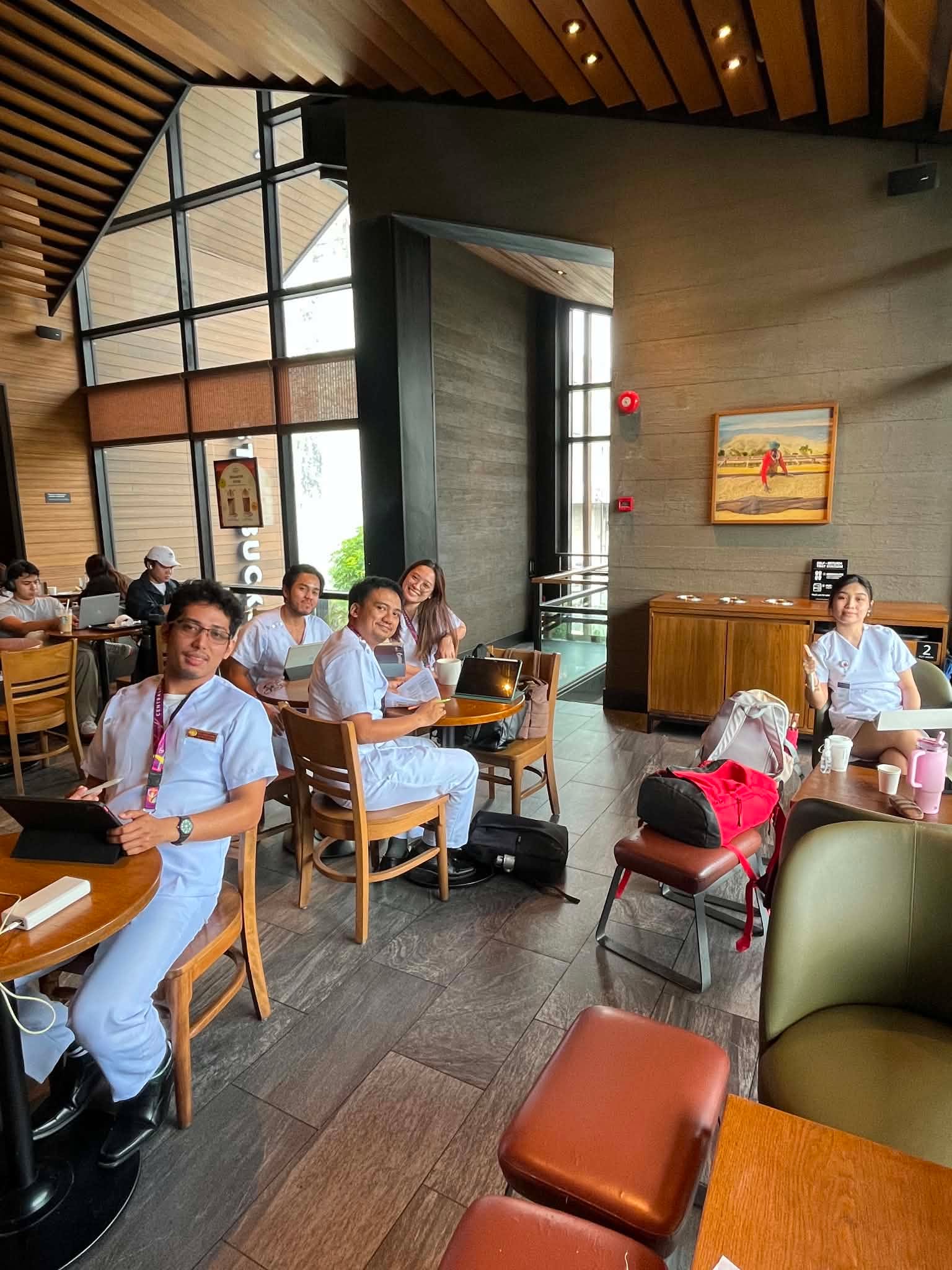
Moments with my classmates remind me that the transition into medicine is also built through community, shared pressure, and encouragement.
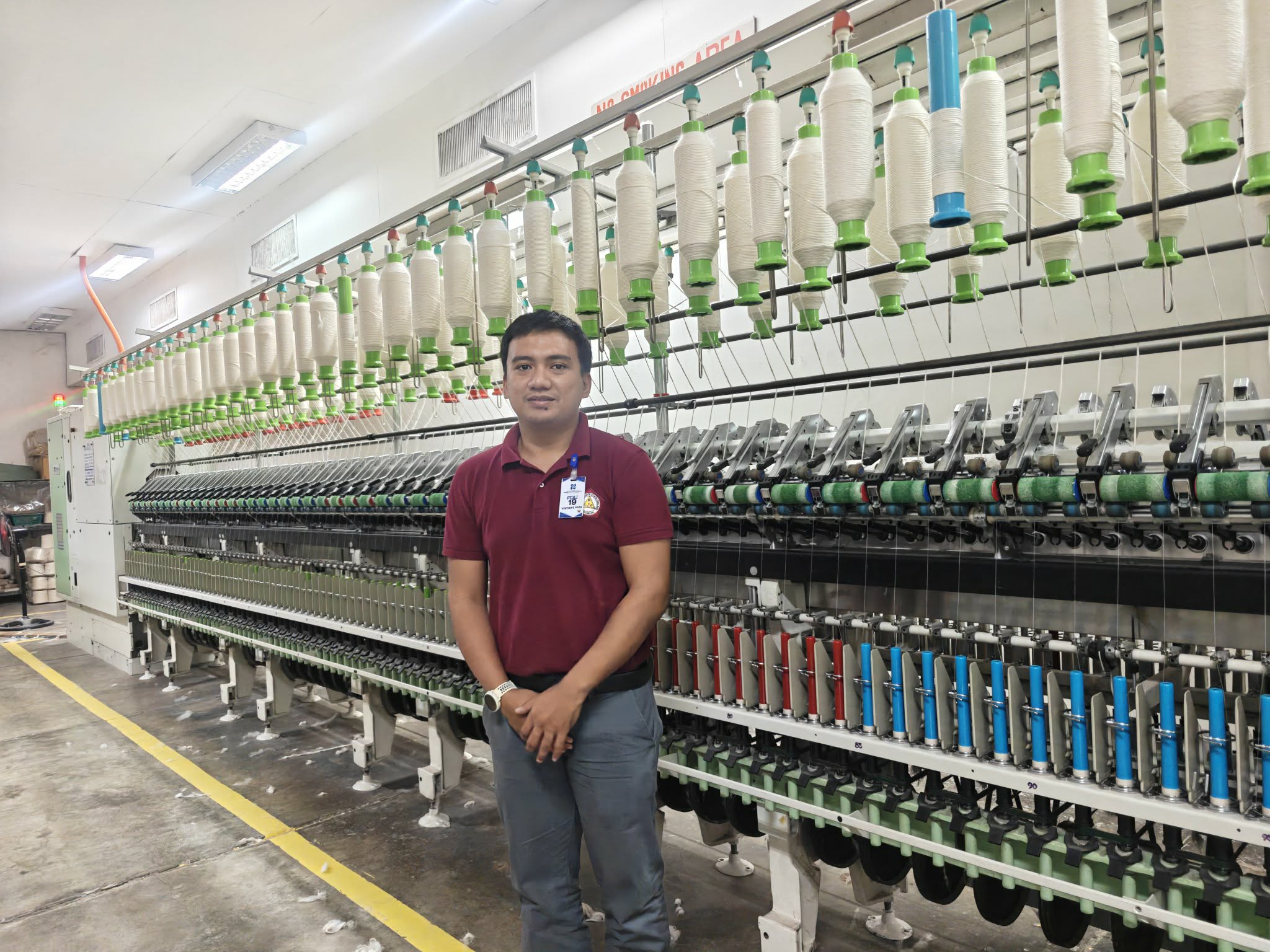
Field exposure keeps my engineering decisions grounded in real operations, real standards, and real consequences.
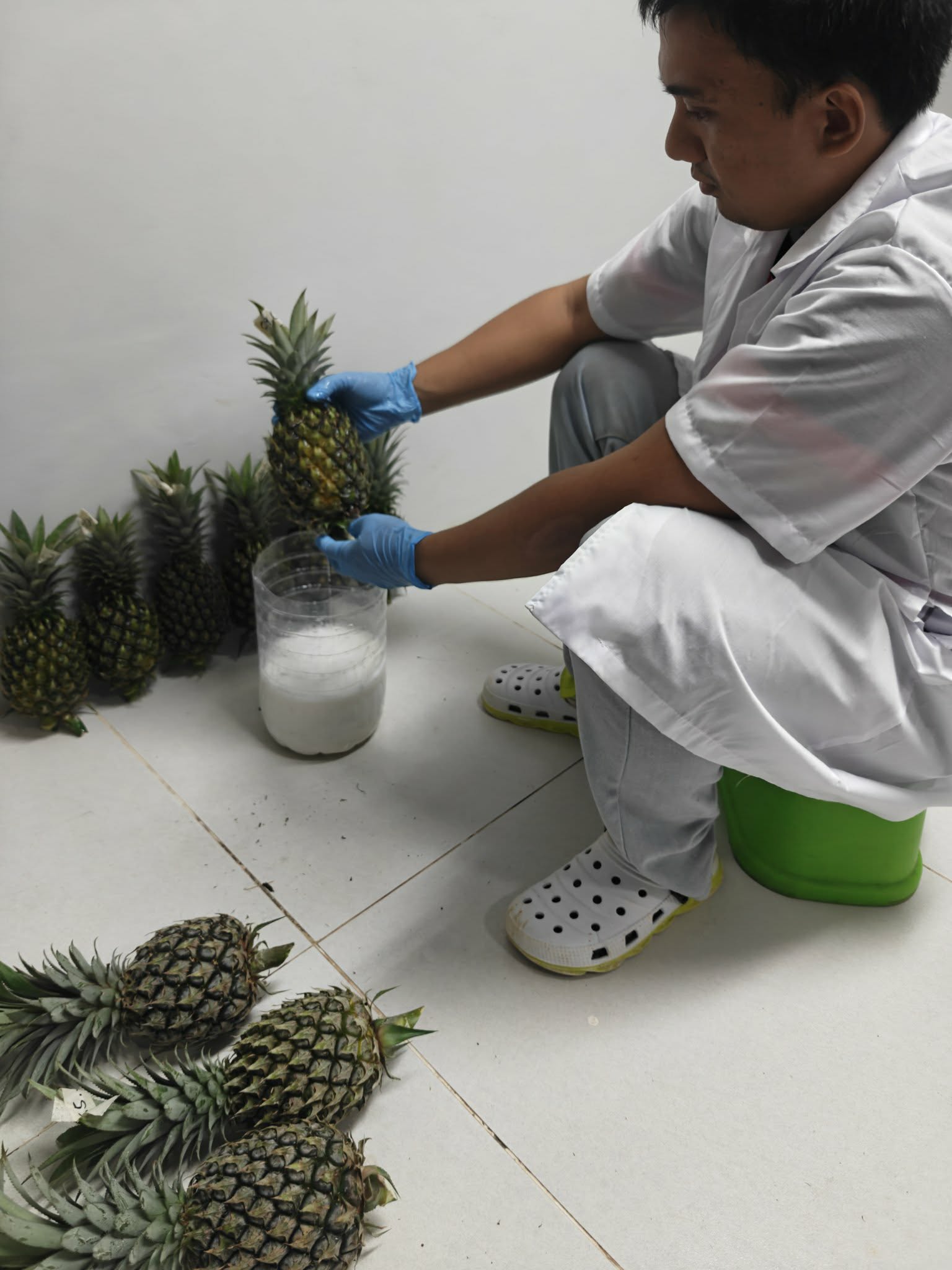
My postharvest work in Camarines Norte taught me to connect data with practical solutions for local producers and communities.
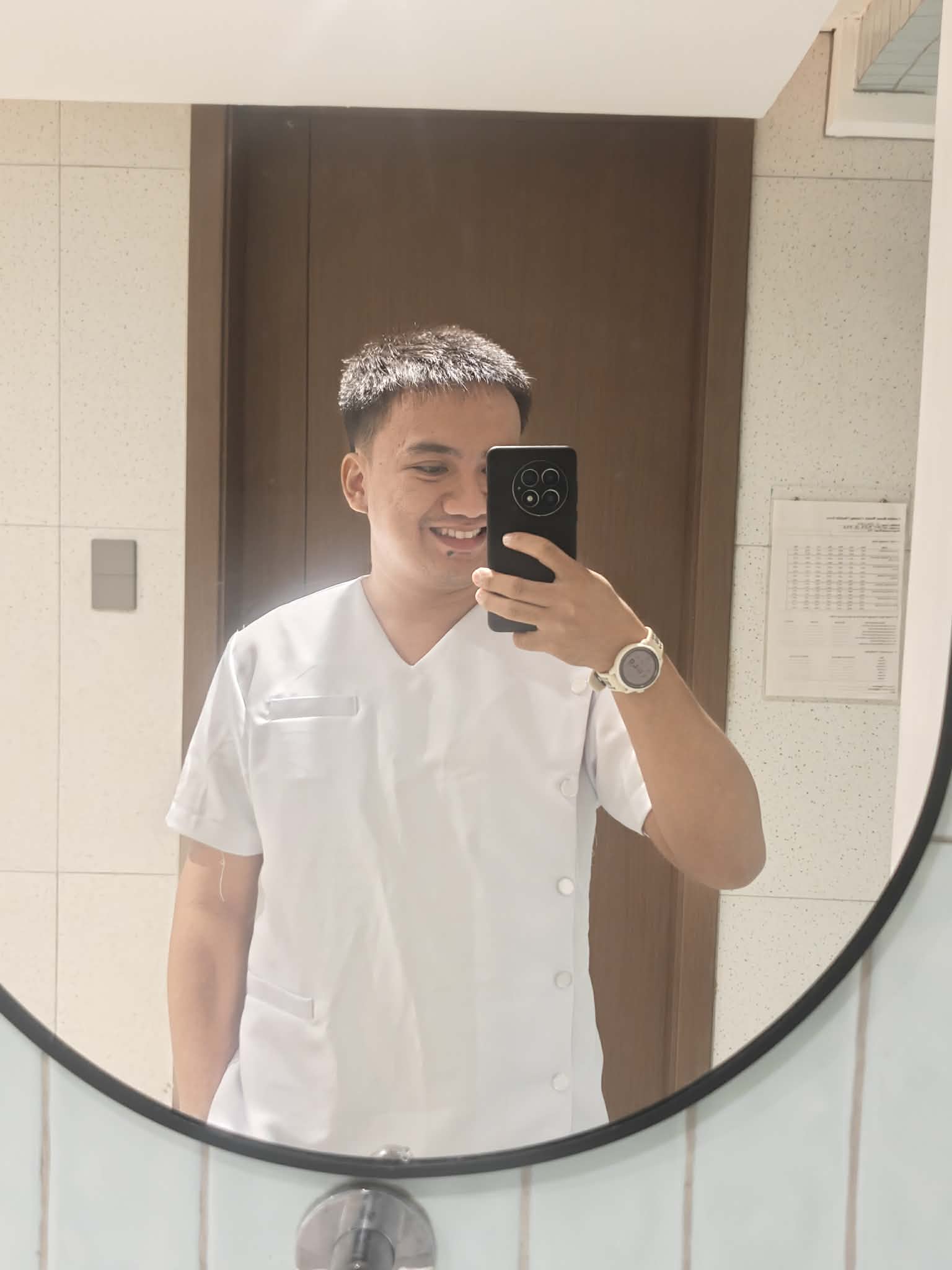
A simple portrait of a new chapter: bringing an engineer’s discipline into the daily work of becoming a physician.
Final reflection
Continuation,
not departure.
My journey from chemical engineering to medicine represents a continuation rather than a departure from my professional path. Engineering taught me to understand systems, analyze problems, work with evidence, and develop practical solutions. Medical school is teaching me to apply these habits to an entirely different and much more complex system—the human body.
As I continue through medical school, I hope to preserve the discipline and analytical mindset I developed as an engineer while building the empathy, communication, and clinical reasoning necessary in medicine. I see the combination of these fields as an opportunity to approach problems from different perspectives and to continue learning throughout my professional life.
This portfolio represents not only what I have accomplished, but also the transition, learning, and growth that continue to shape the professional I hope to become.
Academicfranztiangco.mcu@gmail.com
Engineeringkftengineeringservices@gmail.com
ConnectLinkedIn ↗
Mobile0910 852 1027